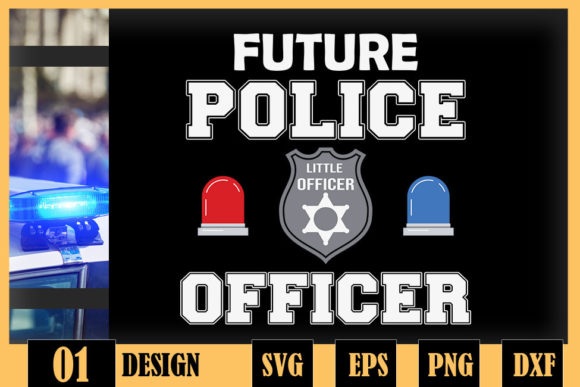
Future Police Officer Lamp: A Designer's Review
As someone who spends most of their waking hours staring at stitch maps and thread charts, I approach every new machine embroidery design with a mix of excitement and skepticism. We've all been there: you download a file that looks crisp on the screen, only to watch it turn into a puckered mess of thread breaks and registration issues once the needle hits the fabric. That is why I took a close look at the Future Police Officer Police Lamp before committing it to any client projects or personal handmade products. This isn't just about whether the image is cute; it is about whether it holds up under the mechanical stress of an embroidery machine and delivers value to the end user.
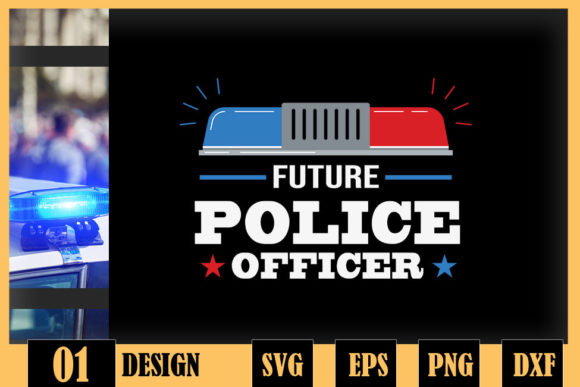
My first impression of this Graphics asset within the Crafts category was its thematic clarity. The concept of a "police lamp" evokes immediate recognition—flashing lights, authority, and community service. For a design intended for a "future" officer, usually meaning a baby or young child, the balance between serious iconography and playful execution is critical. Visually, the layout feels solid. It doesn't rely on overly intricate, hair-thin lines that often disappear under satin stitches or cause bird-nesting on high-speed machines. Instead, it appears to have a visual personality that leans toward bold shapes, which is generally a good sign for durability in a finished product.
Real-World Application: The Baby Shower Gift Test
To truly evaluate this embroidery file, I imagined a specific real-life scenario that many of us face regularly: a last-minute request for a personalized baby shower gift. Let's say a customer wants a custom onesie or a receiving blanket for a parent-to-be whose partner is in the academy or already on the force. The Future Police Officer Police Lamp fits this narrative perfectly. It serves as a proud declaration of family legacy without being overly aggressive.
In this context, I would likely place this design on a soft cotton knit for a bodysuit or a plush minky fabric for a blanket. The mood it creates is one of anticipation and pride. However, the practical challenge here is the fabric texture. Knits stretch, and minky slips. If the design relies heavily on dense fill stitch areas without proper underlay or if the stitch density is too high, the fabric will pucker around the "lamp" shape, distorting the image. A design like this needs to breathe. If the original vector or raster file allows for adjustment in software like Corel Draw or Adobe Illustrator, I would recommend checking the saturation of the stitches. For a baby item, less is often more; you want the design to remain soft against sensitive skin.
Versatility Across Custom Apparel and Home Decor
Beyond baby clothes, this design has legs in the broader custom apparel market. I can easily see this working as a chest logo on a police department hoodie for a family member or even as a patch design for a tote bag. When considering it for a tote bag design, the structural integrity of the canvas or twill fabric supports heavier stitching better than knits do. This allows the "lamp" graphic to pop with vibrant thread colors—likely blues, reds, and whites—without worrying as much about fabric distortion.
For Etsy sellers and small shop owners, versatility is key to ROI. This graphic could be adapted for holiday embroidery, perhaps incorporated into a "Naughty or Nice" police theme for Christmas stockings. It could also serve as a central motif for a nursery decor pillow cover. The clean lines suggest it would translate well to an embroidered patch if digitized with a merrowed edge border, adding another revenue stream for craft business owners who sell accessories rather than just stitched garments.
Technical Considerations and Fabric Constraints
While the aesthetic is promising, we must discuss where caution is required. Any design featuring a "lamp" implies light beams or radiating lines. In embroidery, long running stitches or sharp angles can be tricky. If you are stitching this on a curved surface like a cap or hat, you need to be extremely careful with the alignment. Caps are unforgiving; if the design width exceeds the safe zone of your hoop size, or if the stitch direction fights the curve of the crown, the result will look amateurish.
Furthermore, consider the background fabric color. A police lamp design typically relies on high contrast. If you stitch this on a dark navy sweatshirt using standard thread colors, ensure your digitizing includes a bright underlay to prevent the dark fabric from muting the reds and blues of the lamp. Conversely, on white fabric, ensure there are no stray jump stitches that might look like dirt. For textured fabrics like towels or waffle weave, a design with too much fine detail might get lost. In those cases, this graphic works best if it utilizes bold satin stitch columns rather than complex shading.
Maximizing Value and Professional Presentation
The ultimate test of any digital embroidery file is how it affects the perceived value of the item you are selling. A crisp, well-executed design builds customer trust. If the Future Police Officer Police Lamp stitches out cleanly with clear definition between the light housing and the beam effects, it elevates a simple t-shirt into a boutique product. It signals professionalism. Buyers engage with products that look intentional, not accidental.
For those creating printable mockups or digital product previews, this graphic offers strong branding potential. It tells a story instantly. However, remember that what you see in a PNG preview on a website is not always what the needle does. Before listing this as a commercial asset or using it for client work, you must verify the technical specs.
Essential Designer Notes for Success
Before you hoop your fabric, here is my practical advice for working with this specific design:
- Test on Scrap First: Never run a new design on a final garment without a test stitch-out on similar fabric. Check for puckering and registration.
- Check Stabilizer Compatibility: For stretchy fabrics like those used in baby embroidery, use a cut-away stabilizer. For woven tote bags, a tear-away might suffice, but always err on the side of more support.
- Review Thread Contrast: Ensure your thread chart matches the vibrancy needed for a police theme. Dull threads will make the "lamp" look broken.
- Inspect Small Details: Look closely at the corners of the lamp housing. Are they sharp or rounded? Ensure your machine tension is adjusted to keep corners crisp.
- Verify Licensing: Since this falls under Crafts and Graphics, confirm the license terms. Can you sell the physical embroidered item? Can you resell the digital file? Always clarify this before launching a product line.
- Software Compatibility: The description mentions compatibility with Cricut Design Space, Silhouette Studio, Corel Draw, Adobe Illustrator, and Photoshop. Remember, these are primarily graphic design tools. If you are doing machine embroidery, ensure you have the correct .PES, .DST, or .EXP file format for your specific machine, not just the vector graphic used for printing or cutting.
In conclusion, the Future Police Officer Police Lamp offers a charming and versatile option for makers looking to tap into the law enforcement niche. Its strength lies in its recognizable theme and likely robust structure, making it suitable for everything from sweatshirt embroidery to nursery decor. However, its success depends entirely on the preparatory work you do as the operator. By respecting the limitations of your fabric, choosing the right stabilizer, and testing your tension, you can transform this digital asset into a cherished handmade product that stands the test of time and washing.